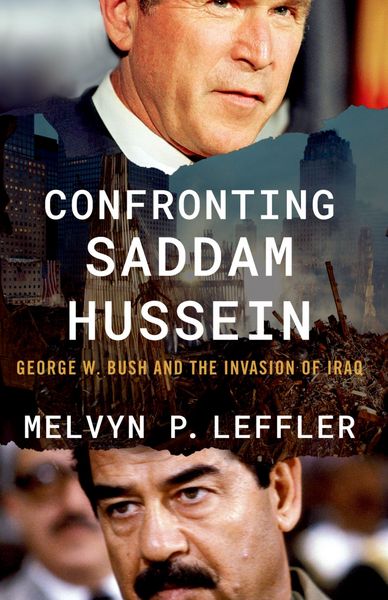
Confronting Saddam Hussein George W. Bush and the Invasion of Iraq
-
- Hardcover
- Taschenbuch ausgewählt
- eBook
-
Sprache:Englisch
31,99 €
inkl. gesetzl. MwSt.,
Beschreibung
Produktdetails
Einband
Taschenbuch
Erscheinungsdatum
25.03.2025
Verlag
Oxford University PressSeitenzahl
370
Maße (L/B/H)
23,6/15,5/2,1 cm
Gewicht
526 g
Sprache
Englisch
ISBN
978-0-19-782038-4
A vivid portrayal of what drove George W. Bush to invade Iraq in 2003--an outcome that was in no way predetermined.
America's decision to go to war in Iraq in 2003 is arguably the most important foreign policy choice of the entire post-Cold War era. Nearly two decades after the event, it remains central to understanding current international politics and US foreign relations.
In Confronting Saddam Hussein, the eminent historian of US foreign policy Melvyn P. Leffler analyzes why the US chose war and who was most responsible for the decision. Employing a unique set of personal interviews with dozens of top officials and declassified American and British documents, Leffler vividly portrays the emotions and anxieties that shaped the thinking of the president after the shocking events of 9/11. He shows how fear, hubris, and power influenced Bush's approach to Saddam Hussein's Iraq. At the core of Leffler's account is his compelling portrait of Saddam Hussein. Rather than stressing Bush's preoccupation with promoting freedom or democracy, Leffler emphasizes Hussein's brutality, opportunism, and unpredictability and illuminates how the Iraqi dictator's record of aggression and intransigence haunted the president and influenced his calculations. Bush was not eager for war, and the decision to invade Iraq was not a fait accompli. Yet the president was convinced that only by practicing coercive diplomacy and threatening force could he alter Hussein's defiance, a view shared by British Prime Minister Tony Blair and other leaders around the world, including Hans Blix, the chief UN inspector. Throughout, Leffler highlights the harrowing anxieties surrounding the decision-making process after the devastating attack on 9/11 and explains the roles of contingency, agency, rationality, and emotion. As the book unfolds, Bush's centrality becomes more and more evident, as does the bureaucratic dysfunctionality that contributed to the disastrous occupation of Iraq.
A compelling reassessment of George W. Bush's intervention in Iraq, Confronting Saddam Hussein provides a provocative reinterpretation of the most important international event of the 21st century.
Ein neues Kapitel für Ihre Bücher
Ein neues Kapitel für Ihre Bücher
Schenken Sie Ihren alten Schätzen ein zweites Leben und erhalten dafür eine Thalia Geschenkkarte.
Noch keine Bewertungen vorhanden
Verfassen Sie die erste Bewertung zu diesem Artikel
Helfen Sie anderen Kundinnen und Kunden durch Ihre Meinung.
Kurze Frage zu unserer Seite
Vielen Dank für Ihr Feedback
Wir nutzen Ihr Feedback, um unsere Produktseiten zu verbessern. Bitte haben Sie Verständnis, dass wir Ihnen keine Rückmeldung geben können. Falls Sie Kontakt mit uns aufnehmen möchten, können Sie sich aber gerne an unseren Kund*innenservice wenden.
zum Kundenservice