















































KI-Beratung Beta

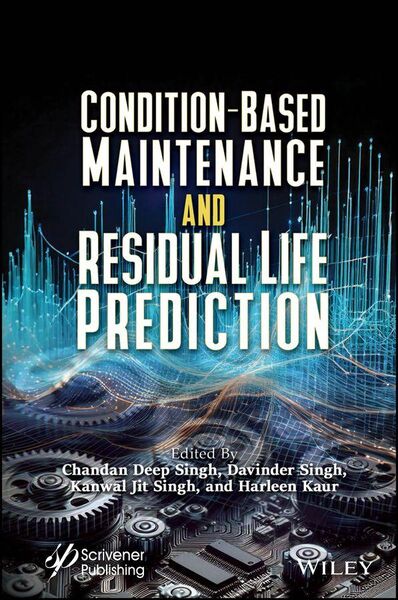
Produktbild: Condition-Based Maintenance and Residual Life Prediction

Condition-Based Maintenance and Residual Life Prediction

181,99 €

inkl. gesetzl. MwSt.

Beschreibung

Condition-Based Maintenance and Residual Life Prediction is essential for those looking to effectively implement condition-based maintenance strategies and enhance fault detection through a comprehensive understanding of vibration data analysis and residual life prediction, addressing key challenges...

Beschreibung

Condition-Based Maintenance and Residual Life Prediction is essential for those looking to effectively implement condition-based maintenance strategies and enhance fault detection through a comprehensive understanding of vibration data analysis and residual life prediction, addressing key challenges in the field.

Issues related to condition-based maintenance include its high initial cost, new techniques that can be difficult to implement due to resistance, older equipment that can be difficult to retrofit with sensors and monitoring equipment, and difficult-to-access equipment during production that is difficult to spot-measure. Keeping the above issues in mind, a general handbook for condition-based maintenance and residual life prediction is required to carry out in fault detection.

Condition-Based Maintenance and Residual Life Prediction aims to develop, analyze, and model condition-based maintenance and residual life prediction through vibration data. The analysis of vibration responses will aid in developing a fault detection system. The sources of vibration may be due to the presence of different types of defects, such as cracks in the shaft, a bent shaft, or misalignment of shafts. This will give designers a diagnostic tool for predicting the trends of vibration conditions, leading to early fault detection. The devised tool will be capable of quantifying the amplitude of vibration based on the severity of defects. With the features available in the devised diagnostic tool, the proposed model can be used for design, predictive maintenance, and condition-based maintenance.

Produktdetails

Format

PDF

Kopierschutz

Ja

Family Sharing

Nein

Text-to-Speech

Nein

Produktdetails

Format

PDF

Format

eBooks im PDF-Format haben eine festgelegte Seitengröße und eignen sich daher nur bedingt zum Lesen auf einem tolino eReader oder Smartphone. Für den vollen Lesegenuss empfehlen wir Ihnen bei PDF-eBooks die Verwendung eines Tablets oder Computers.

Kopierschutz

Ja

Kopierschutz

Zum Lesen dieses eBooks auf Geräten der tolino Familie sowie auf sonstigen eReadern und am PC benötigen Sie eine ByteBook-ID. Weitere Hinweise zum Lesen von kopiergeschützten eBooks finden Sie unter Hilfe/Downloads.

Family Sharing

Nein

Family Sharing

Mit Family Sharing können Sie eBooks innerhalb Ihrer Familie (max. sechs Mitglieder im gleichen Haushalt) teilen. Sie entscheiden selbst, welches Buch Sie mit welchem Familienmitglied teilen möchten. Auch das parallele Lesen durch verschiedene Familienmitglieder ist durch Family Sharing möglich. Um eBooks zu teilen oder geteilt zu bekommen, muss jedes Familienmitglied ein Konto bei Thalia oder einem anderen tolino-Buchhändler haben. Weitere Informationen finden Sie unter Hilfe/Family-Sharing.

Text-to-Speech

Nein

Text-to-Speech

Bedeutet Ihnen Stimme mehr als Text? Mit der Funktion Text-to-Speech können Sie sich im tolino webReader und in der aktuellen Thalia – Lesen & Hören App das eBook vorlesen lassen. Weitere Informationen finden Sie unter Hilfe/Text-to-Speech.

Erscheinungsdatum

04.03.2025

Herausgeber
Verlag Wiley
Seitenzahl

296 (Printausgabe)

Dateigröße

18961 KB

Auflage

1. Auflage

Sprache

Englisch

EAN

9781119933168

Barrierefreiheit
  • keine Information zur Barrierefreiheit bekannt

Noch keine Bewertungen vorhanden

Verfassen Sie die erste Bewertung zu diesem Artikel

Helfen Sie anderen Kundinnen und Kunden durch Ihre Meinung.

Kundinnen und Kunden meinen

Bewertungen (0)

Weitere Artikel finden Sie in

Die Leseprobe wird geladen.
  • Produktbild: Condition-Based Maintenance and Residual Life Prediction