















































KI-Beratung Beta

Gutscheinbedingungen

Gültig bis 30.11.2026 | Gültig für nicht preisgebundene fremdsprachige Bücher | Einzelne Artikel können ausgeschlossen sein | Online auf thalia.de und in der Thalia App einlösbar | Click & Collect nur mit Online-Zahlung (Paypal/Kreditkarte) vorab | Nicht kombinierbar mit anderen Gutscheinen oder Preisaktionen | Nur einmal pro Einkauf einlösbar | Gutschein wird auf max. 500€ Bestellwert angerechnet | Keine Barauszahlung | Nicht gültig für Versandkosten und Services

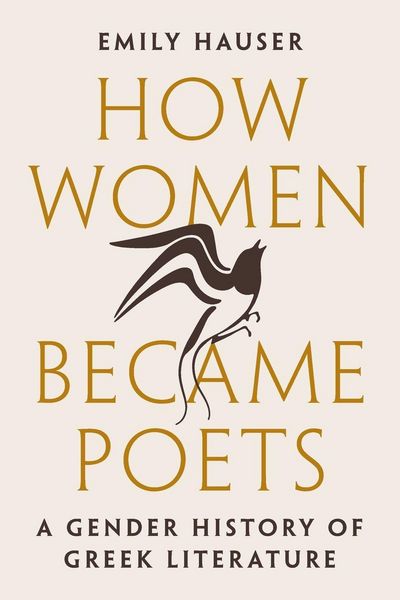
Produktbild: How Women Became Poets

How Women Became Poets A Gender History of Greek Literature

29,99 €

inkl. gesetzl. MwSt., Versandkostenfrei


Beschreibung

How the idea of the author was born in the battleground of gender When Sappho sang her songs, the only word that existed to describe a poet was a male one—aoidos, or “singer-man.” The most famous woman poet of ancient Greece, whose craft was one of words, had no words with which to talk about who she...

Beschreibung

How the idea of the author was born in the battleground of gender
When Sappho sang her songs, the only word that existed to describe a poet was a male one—aoidos, or “singer-man.” The most famous woman poet of ancient Greece, whose craft was one of words, had no words with which to talk about who she was and what she did. In How Women Became Poets, Emily Hauser rewrites the story of Greek literature as one of gender, arguing that the ways the Greeks talked about their identity as poets constructed, played with, and broke down gender expectations that literature was for men alone. Bringing together recent studies in ancient authorship, gender, and performativity, Hauser offers a new history of classical literature that redefines the canon as a constant struggle to be heard through, and sometimes despite, gender.
Women, as Virginia Woolf recognized, need rooms of their own in order to write. So, too, have women writers through history needed a name to describe what it is they do. Hauser traces the invention of that name in ancient Greece, exploring the archaeology of the gendering of the poet. She follows ancient Greek poets, philosophers, and historians as they developed and debated the vocabulary for authorship on the battleground of gender—building up and reinforcing the word for male poet, then in response creating a language with which to describe women who write. Crucially, Hauser reinserts women into the traditionally all-male canon of Greek literature, arguing for the centrality of their role in shaping ideas around authorship and literary production.

Produktdetails

Einband

Taschenbuch

Erscheinungsdatum

04.11.2025

Abbildungen

4 b/w illus.

Verlag University Presses

Produktdetails

Einband

Taschenbuch

Erscheinungsdatum

04.11.2025

Abbildungen

4 b/w illus.

Verlag University Presses
Seitenzahl

376

Maße (L/B/H)

23,4/15,6/2,3 cm

Gewicht

639 g

Sprache

Englisch

ISBN

978-0-691-24876-9

Herstelleradresse

Libri GmbH
Europaallee 1
36244 Bad Hersfeld
DE

Email: gpsr@libri.de

Ein neues Kapitel für Ihre Bücher

Ein neues Kapitel für Ihre Bücher

Schenken Sie Ihren alten Schätzen ein zweites Leben und erhalten Sie dafür eine Thalia Geschenkkarte.

Jetzt verkaufen
Jetzt verkaufen

Noch keine Bewertungen vorhanden

Verfassen Sie die erste Bewertung zu diesem Artikel

Helfen Sie anderen Kundinnen und Kunden durch Ihre Meinung.

Kundinnen und Kunden meinen

Bewertungen (0)

Die Leseprobe wird geladen.
  • Produktbild: How Women Became Poets