















































KI-Beratung Beta

Gutscheinbedingungen

Gültig bis 30.11.2026 | Gültig für nicht preisgebundene fremdsprachige Bücher | Einzelne Artikel können ausgeschlossen sein | Online auf thalia.de und in der Thalia App einlösbar | Click & Collect nur mit Online-Zahlung (Paypal/Kreditkarte) vorab | Nicht kombinierbar mit anderen Gutscheinen oder Preisaktionen | Nur einmal pro Einkauf einlösbar | Gutschein wird auf max. 500€ Bestellwert angerechnet | Keine Barauszahlung | Nicht gültig für Versandkosten und Services

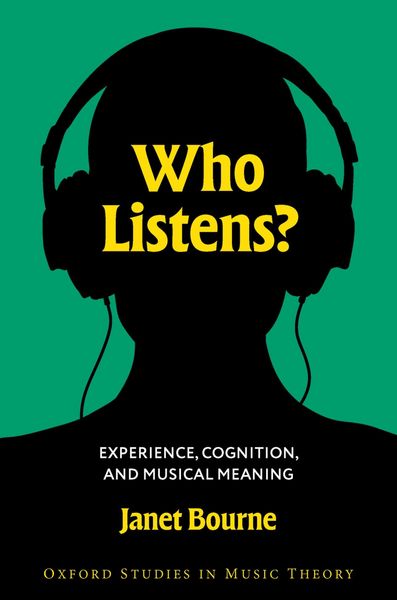
Produktbild: Who Listens?

Who Listens? Experience, Cognition, and Musical Meaning

37,99 €

inkl. gesetzl. MwSt., Versandkostenfrei


Beschreibung

Imagine someone who attended a Beethoven Symphony in 1805. Now imagine a listener attending the same symphony today. Both create meanings by relying on previous experiences, but no one assumes they leave their concerts with the same experience. Yet, when analyzing music, we often rely on "ideal listeners,"...

Beschreibung

Imagine someone who attended a Beethoven Symphony in 1805. Now imagine a listener attending the same symphony today. Both create meanings by relying on previous experiences, but no one assumes they leave their concerts with the same experience. Yet, when analyzing music, we often rely on "ideal listeners," presuming all have the same experience. Who Listens? Experience, Cognition, and Musical Meaning is a fascinating look into the importance of who is listening and how. Author Janet Bourne presents a new set of cognitively-based tools for analyzing music from the perspective of the listener. This book shows how listening is an active and creative act, and that many people make sense of music largely by drawing on their previous experiences, particularly experiences with music. According to research in cognitive science, listeners use a musical form of analogy and categorization to relate what they previously heard to what they hear in the moment. To demonstrate that listeners draw on this experience to perceive meaning when listening, Bourne combines music analytic tools, empirical psychological methods, and reception history. Drawing on analogy and categorization, Bourne has designed cognitively-based tools for analyzing music from the perspective of the listener to create different interpretations for different listeners. While Part 1 outlines the analytical tools, Part 2 analyzes pieces by Beethoven from the perspective of three groups of listeners: Beethoven's early 19th-century contemporaries; late 20th- and 21st-century musicians and music scholars; and 21st-century film-goers. In so doing, this book illuminates how musical meanings change when considering different listeners' backgrounds and ways of listening, giving voice to overlooked reception histories and musical meanings.

Produktdetails

Einband

Taschenbuch

Erscheinungsdatum

29.07.2025

Abbildungen

42

Verlag Oxford University Press

Produktdetails

Einband

Taschenbuch

Erscheinungsdatum

29.07.2025

Abbildungen

42

Verlag Oxford University Press
Seitenzahl

328

Maße (L/B/H)

23,2/16/2 cm

Gewicht

463 g

Sprache

Englisch

ISBN

978-0-19-779717-4

Herstelleradresse

Libri GmbH
Europaallee 1
36244 Bad Hersfeld
DE

Email: gpsr@libri.de

Ein neues Kapitel für Ihre Bücher

Ein neues Kapitel für Ihre Bücher

Schenken Sie Ihren alten Schätzen ein zweites Leben und erhalten Sie dafür eine Thalia Geschenkkarte.

Jetzt verkaufen
Jetzt verkaufen

Noch keine Bewertungen vorhanden

Verfassen Sie die erste Bewertung zu diesem Artikel

Helfen Sie anderen Kundinnen und Kunden durch Ihre Meinung.

Kundinnen und Kunden meinen

Bewertungen (0)

  • Produktbild: Who Listens?
    • Introduction: Who's Listening?
    • 1: Analogy and Listening
    • 2: Listener Experience, Modes of Listening, and Conceptual Knowledge
    • 2.1: Interlude: Creating Composite Listeners and Cast of Characters
    • 3: Irony and Happy Endings in Beethoven's String Quartet, Op. 95/iv
    • Empirical Vignette #1: Experiment on Cinematic Listening and Op. 95/iv
    • 4: A "Woman's Way of Listening" to Beethoven: Perceiving a Lullaby Topic in Op. 90/II and Op. 101/I
    • Empirical Vignette #2: Experiment on Hearing Orchestral March Topics
    • 5: Beethoven's Darth Vader and Op. 26/iii
    • Appendix I: Methods and Statistical Results for Empirical Vignette #1
    • Appendix II: Methods and Statistical Results for Empirical Vignette #2
    • Appendix III: Cognitive Constraints in Structural Alignment