















































KI-Beratung Beta

Gutscheinbedingungen

Gültig bis 30.11.2026 | Gültig für nicht preisgebundene fremdsprachige Bücher | Einzelne Artikel können ausgeschlossen sein | Online auf thalia.de und in der Thalia App einlösbar | Click & Collect nur mit Online-Zahlung (Paypal/Kreditkarte) vorab | Nicht kombinierbar mit anderen Gutscheinen oder Preisaktionen | Nur einmal pro Einkauf einlösbar | Gutschein wird auf max. 500€ Bestellwert angerechnet | Keine Barauszahlung | Nicht gültig für Versandkosten und Services

Produktbild: Making Food Empires

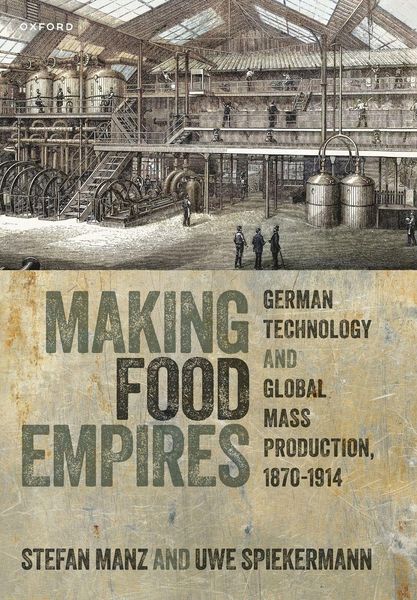
Making Food Empires German Technology and Global Mass Production, 1870-1914

143,99 €

inkl. gesetzl. MwSt., Versandkostenfrei


Beschreibung

The rise of German science and technology in the nineteenth century had a significant impact on food production on a global scale. The spread of scientific methods facilitated the emergence of those mass markets that determine consumption patterns up until today. This book analyses the industrialization...

Beschreibung

The rise of German science and technology in the nineteenth century had a significant impact on food production on a global scale. The spread of scientific methods facilitated the emergence of those mass markets that determine consumption patterns up until today. This book analyses the industrialization and globalization of foodways through the prism of three commodities: sugar, rum, and beer. Themes include the global competition between continental beet sugar and colonial cane sugar, the complex adaptations and chemical modifications of rum, and the rise of German- and Bohemian-style lager beer which increasingly ousted the darker, British-style beers. From technical development to production and distribution, German engineers, scientists, and entrepreneurs were involved in locations around the world. The flow of know-how, patents, machinery, and people transcended national and imperial boundaries, leading to transnational knowledge exchange in all world regions. Case study chapters focus on Claus Spreckels, the 'Sugar King' of Hawaii and California; the chemical engineer George Stade who built the first industrial rum factory in Barbados; and the Joseph Schlitz Brewing Company, which was the largest brewery in the world in 1900. Transnationally operating individuals and companies set in motion a dynamic of global innovation that encapsulated centralized mass production, seamless transport networks, new ways of food preservation, and the idea of branded goods for global markets. They transformed the way we produce, consume, and think about food in the modern world.

Produktdetails

Einband

Gebundene Ausgabe

Erscheinungsdatum

05.03.2026

Abbildungen

50 b&w images; 3 tables

Verlag Oxford Academic

Produktdetails

Einband

Gebundene Ausgabe

Erscheinungsdatum

05.03.2026

Abbildungen

50 b&w images; 3 tables

Verlag Oxford Academic
Seitenzahl

258

Maße (L/B/H)

23,4/15,6/1,6 cm

Gewicht

540 g

Sprache

Englisch

ISBN

978-0-19-896695-1

Herstelleradresse

Libri GmbH
Europaallee 1
36244 Bad Hersfeld
DE

Email: gpsr@libri.de

Ein neues Kapitel für Ihre Bücher

Ein neues Kapitel für Ihre Bücher

Schenken Sie Ihren alten Schätzen ein zweites Leben und erhalten Sie dafür eine Thalia Geschenkkarte.

Jetzt verkaufen
Jetzt verkaufen

Noch keine Bewertungen vorhanden

Verfassen Sie die erste Bewertung zu diesem Artikel

Helfen Sie anderen Kundinnen und Kunden durch Ihre Meinung.

Kundinnen und Kunden meinen

Bewertungen (0)

  • Produktbild: Making Food Empires
    • 1: Introduction
    • 2: Mass Production and Globalizing Foodways
    • 3: Sugar The Science of Sweetness
    • 4: Claus Spreckels'Sugar King' of California and Hawaii
    • 5: RumThe Chemistry of Colonialism
    • 6: Georg(e) Stade Scientific Rum Making in Barbados
    • 7: BeerThe Technology of Transformation
    • 8: Joseph Schlitz and the Uihlein BrothersIndustrial Brewing in the United States
    • 9: Conclusion: Making Modern Food Worlds