















































KI-Beratung Beta

Gutscheinbedingungen

Gültig bis 30.11.2026 | Gültig für nicht preisgebundene fremdsprachige Bücher | Einzelne Artikel können ausgeschlossen sein | Online auf thalia.de und in der Thalia App einlösbar | Click & Collect nur mit Online-Zahlung (Paypal/Kreditkarte) vorab | Nicht kombinierbar mit anderen Gutscheinen oder Preisaktionen | Nur einmal pro Einkauf einlösbar | Gutschein wird auf max. 500€ Bestellwert angerechnet | Keine Barauszahlung | Nicht gültig für Versandkosten und Services

Produktbild: The Reception of Ancient Egypt in Venice, 1400-1800
- 11%

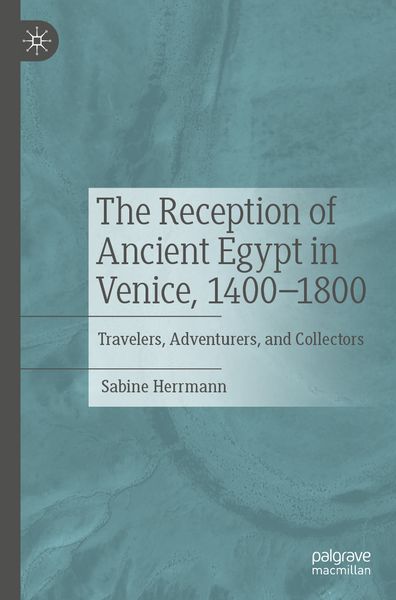
The Reception of Ancient Egypt in Venice, 1400-1800 Travelers, Adventurers, and Collectors

11% sparen

141,99 € UVP 160,49 €

inkl. gesetzl. MwSt., Versandkostenfrei


Beschreibung

This book examines for the first time how ancient Egypt is reflected in early modern Venetian sources. As a center of the printing industry, Venice was an important hub for the accumulation and dissemination of direct information on the Near East and the Levant. Therefore, ancient Egypt played a significant...

Beschreibung

This book examines for the first time how ancient Egypt is reflected in early modern Venetian sources. As a center of the printing industry, Venice was an important hub for the accumulation and dissemination of direct information on the Near East and the Levant. Therefore, ancient Egypt played a significant role in the cultural memory of Venice due to the lagoon city’s religious and mercantile orientation towards the East. The book explores how the acquisition, selection, and interpretation of Egyptian objects took shape in Venice, and which actors were involved in the circulation of knowledge about ancient Egypt. Venice can be used as a lens through which to understand the reception of ancient Egypt in the early modern period. Meaningful and partly unpublished sources from primarily Italian archives highlight the visual imagination of ancient Egypt and its lexicographical codification. The author draws upon these sources to examine the Venetian image of ancient Egypt in the early modern period and the epistemic change that accompanied it.


Produktdetails

Einband

Taschenbuch

Erscheinungsdatum

06.06.2025

Abbildungen

XII, 258 p. 19 illus., 12 illus. in color.

Verlag Springer

Produktdetails

Einband

Taschenbuch

Erscheinungsdatum

06.06.2025

Abbildungen

XII, 258 p. 19 illus., 12 illus. in color.

Verlag Springer
Seitenzahl

258

Maße (L/B/H)

23,5/15,5/1,5 cm

Gewicht

417 g

Sprache

Englisch

ISBN

978-3-031-57717-8

Herstelleradresse

Springer-Verlag GmbH
Tiergartenstr. 17
69121 Heidelberg
DE

Email: ProductSafety@springernature.com

Ein neues Kapitel für Ihre Bücher

Ein neues Kapitel für Ihre Bücher

Schenken Sie Ihren alten Schätzen ein zweites Leben und erhalten Sie dafür eine Thalia Geschenkkarte.

Jetzt verkaufen
Jetzt verkaufen

Noch keine Bewertungen vorhanden

Verfassen Sie die erste Bewertung zu diesem Artikel

Helfen Sie anderen Kundinnen und Kunden durch Ihre Meinung.

Kundinnen und Kunden meinen

Bewertungen (0)

  • Produktbild: The Reception of Ancient Egypt in Venice, 1400-1800

  • .- Introduction.


    .- Part I. The Beginnings: Venice and the East in the Tre and Auattrocento.


    .- 2. Accumulation, Integration and Assimilation: The Reception of Antiquity as Part of the Venetian Civic Identity.


    .- 3. Ancient Egypt in Literature: The Hypnerotomachia Poliphili.


    .- 4. Beyond Egypt: The Discovery of the Ancient Near East in Venice.- Part II. The Ancient Metropolises of Alexandria and Cairo.


    .- 5. The Old in the New: The Urban Transformation of Alexandria.


    .- 6. Cairo: The "New" City and the Ancient Monuments.- Part III. The Discovery of Upper Egypt.


    .- 7. Upper Egypt: An Unknown Geographical Area?.


    .- 8. The Ancient Monuments of Upper Egypt.- Part IV. Collecting Ancient Egyptian Objects.


    .- 9. Materiality, Space and Self-fashioning: Aegyptiaca in Early Modern Collections.


    .- 10. The Sixteenth Century.


    .- 11. The Seventeenth Century.


    .- 12. The Eighteenth Century.- Part V. Conclusions.


    .- 13. Conclusion.