















































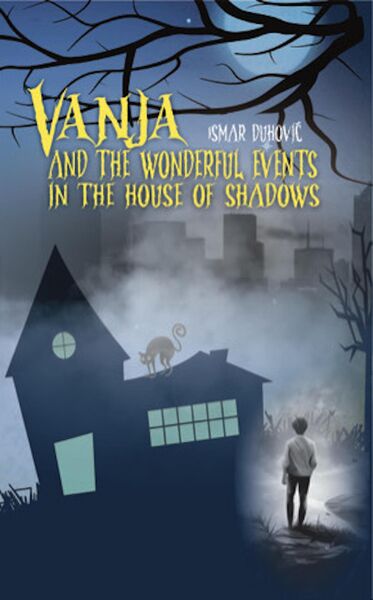
The novel received the prestigious Little Prince Award in 2025, recognising its contribution to children's literature in the Balkan region. An English-language edition, Vanja and the Wonderful Events in the House of Shadows, has also been published, creating opportunities to introduce the story to a wider international readership.
Literary representation for Vanja and the Wonderful Events in the House of Shadows, an emotionally resonant work of fiction that blends fantasy, mystery, mysticism, and horror with a deeply human exploration of childhood trauma, resilience, friendship, and the need to be heard and understood.
At the heart of the novel is Vanja, a boy approaching the end of primary school who grows up without parental care in a violent environment. Although he is capable of speaking, he remains silent, carrying emotional wounds that make it difficult for him to express himself or find safety in the world around him. His closest companions are Nela, a fiercely loyal friend who understands him and often speaks on his behalf, and Maci, his faithful cat. Together, they offer Vanja a fragile sense of belonging in a life marked by fear and isolation.
Vanja's circumstances become increasingly unbearable when his stepfather's violence escalates. Yet help comes from an unexpected source: Aunt Nada, an extraordinary elderly neighbour who lives on the floor below. Far from an ordinary woman, Nada possesses a mysterious connection to another time and place, and she intervenes in ways that transcend the boundaries of the everyday world. Meanwhile, Nela refuses to stand by when Vanja is bullied, demonstrating the courage and loyalty that become essential to his struggle.
However, protection from the immediate dangers of Vanja's life does not resolve the deeper conflict. When he enters the mysterious House of Shadows, he awakens something unforeseen and potentially dangerous. What initially appears to offer an escape from the harshness of reality becomes a new source of uncertainty, drawing Vanja into a world where imagination, supernatural forces, and fear intersect. As he navigates these extraordinary events, the distinction between refuge and danger becomes increasingly difficult to discern.
Vanja's struggle is therefore both external and internal: he must confront the dangers surrounding him while finding a way to live with the emotional consequences of his experiences. Through friendship, courage, imagination, and unexpected supernatural encounters, the story explores whether a child who has learned to survive through silence can begin to reclaim his voice and sense of agency. The novel's central tension lies in the relationship between the real world that has wounded Vanja and the mysterious world that offers both possibilities and new threats.
Written by Ismar Duhovic, a writer and educator with extensive professional experience in early-childhood education and work with children with special needs, the novel draws on a profound understanding of children's emotional lives. Its combination of suspense, supernatural storytelling, and psychological depth creates a narrative that can engage younger readers while offering parents and adult readers a meaningful perspective on childhood, empathy, and the lasting effects of emotional harm.