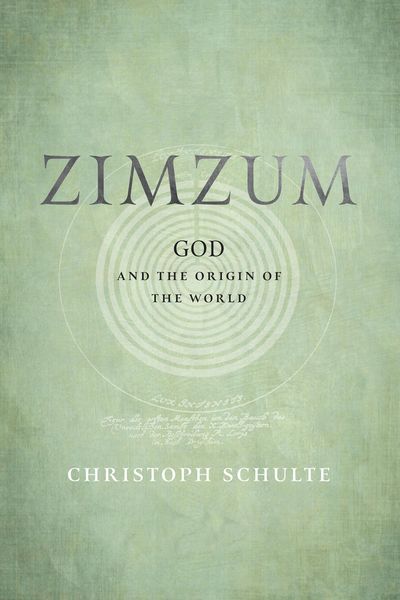
Zimzum God and the Origin of the World
73,49 €
inkl. gesetzl. MwSt.Beschreibung
Produktdetails
Format
ePUB
Kopierschutz
Nein
Family Sharing
Nein
Text-to-Speech
Ja
Erscheinungsdatum
12.09.2023
Verlag
Princeton University PressSeitenzahl
424 (Printausgabe)
Übersetzt von
Corey Twitchell
Sprache
Englisch
EAN
9781512824360
The Hebrew word zimzum originally means "contraction," "withdrawal," "retreat," "limitation," and "concentration." In Kabbalah, zimzum is a term for God's self-limitation, done before creating the world to create the world. Jewish mystic Isaac Luria coined this term in Galilee in the sixteenth century, positing that the God who was "Ein-Sof," unlimited and omnipresent before creation, must concentrate himself in the zimzum and withdraw in order to make room for the creation of the world in God's own center. At the same time, God also limits his infinite omnipotence to allow the finite world to arise. Without the zimzum there is no creation, making zimzum one of the basic concepts of Judaism.
The Lurianic doctrine of the zimzum has been considered an intellectual showpiece of the Kabbalah and of Jewish philosophy. The teaching of the zimzum has appeared in the Kabbalistic literature across Central and Eastern Europe, perhaps most famously in Hasidic literature up to the present day and in philosopher and historian Gershom Scholem's epoch-making research on Jewish mysticism. The Zimzum has fascinated Jewish and Christian theologians, philosophers, and writers like no other Kabbalistic teaching. This can be seen across the philosophy and cultural history of the twentieth century as it gained prominence among such diverse authors and artists as Franz Rosenzweig, Hans Jonas, Isaac Bashevis Singer, Harold Bloom, Barnett Newman, and Anselm Kiefer.
This book follows the traces of the zimzum across the Jewish and Christian intellectual history of Europe and North America over more than four centuries, where Judaism and Christianity, theosophy and philosophy, divine and human, mysticism and literature, Kabbalah and the arts encounter, mix, and cross-fertilize the interpretations and appropriations of this doctrine of God's self-entanglement and limitation.
Noch keine Bewertungen vorhanden
Verfassen Sie die erste Bewertung zu diesem Artikel
Helfen Sie anderen Kundinnen und Kunden durch Ihre Meinung.
Kurze Frage zu unserer Seite
Vielen Dank für Ihr Feedback
Wir nutzen Ihr Feedback, um unsere Produktseiten zu verbessern. Bitte haben Sie Verständnis, dass wir Ihnen keine Rückmeldung geben können. Falls Sie Kontakt mit uns aufnehmen möchten, können Sie sich aber gerne an unseren Kund*innenservice wenden.
zum Kundenservice