















































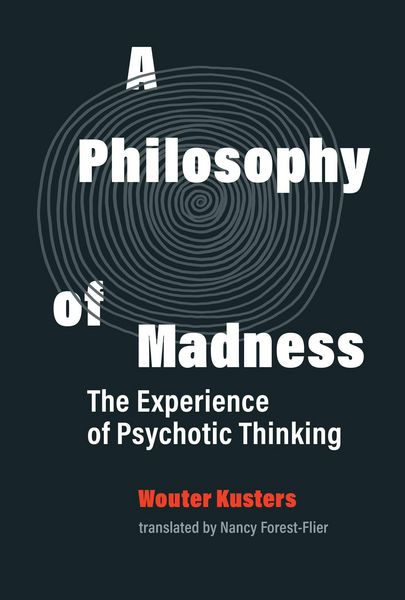
A Philosophy of Madness The Experience of Psychotic Thinking
-
- Taschenbuch ausgewählt
- eBook
-
Sprache:Englisch
38,99 €
inkl. gesetzl. MwSt.,
Beschreibung
Produktdetails
Einband
Taschenbuch
Erscheinungsdatum
08.09.2026
Verlag
MIT PressSeitenzahl
768
Maße (L/B/H)
15,1/22,9/3,6 cm
Gewicht
924 g
Sprache
Englisch
ISBN
978-0-262-05721-9
In this book, philosopher and linguist Wouter Kusters examines the philosophy of psychosis—and the psychosis of philosophy. By analyzing the experience of psychosis in philosophical terms, Kusters not only emancipates the experience of the psychotic from medical classification, he also emancipates the philosopher from the narrowness of textbooks and academia, allowing philosophers to engage in real-life praxis, philosophy in vivo. Philosophy and madness—Kusters's preferred, non-medicalized term—coexist, one mirroring the other.
Kusters draws on his own experience of madness—two episodes of psychosis, twenty years apart—as well as other first-person narratives of psychosis. Speculating about the maddening effect of certain words and thought, he argues, and demonstrates, that the steady flow of philosophical deliberation may sweep one into a full-blown acute psychotic episode. Indeed, a certain kind of philosophizing may result in confusion, paradoxes, unworldly insights, and circular frozenness reminiscent of madness. Psychosis presents itself to the psychotic as an inescapable truth and reality.
Kusters evokes the mad person's philosophical or existential amazement at reality, thinking, time, and space, drawing on classic autobiographical accounts of psychoses by Antonin Artaud, Daniel Schreber, and others, as well as the work of phenomenological psychiatrists and psychologists and such phenomenologists as Edmund Husserl and Maurice Merleau-Ponty. He considers the philosophical mystic and the mystical philosopher, tracing the mad undercurrent in the Husserlian philosophy of time; visits the cloud castles of mystical madness, encountering LSD devotees, philosophers, theologians, and nihilists; and, falling to earth, finds anxiety, emptiness, delusions, and hallucinations. Madness and philosophy proceed and converge toward a single vanishing point.
Ein neues Kapitel für Ihre Bücher
Ein neues Kapitel für Ihre Bücher
Schenken Sie Ihren alten Schätzen ein zweites Leben und erhalten Sie dafür eine Thalia Geschenkkarte.
Noch keine Bewertungen vorhanden
Verfassen Sie die erste Bewertung zu diesem Artikel
Helfen Sie anderen Kundinnen und Kunden durch Ihre Meinung.
Kurze Frage zu unserer Seite
Vielen Dank für Ihr Feedback
Wir nutzen Ihr Feedback, um unsere Produktseiten zu verbessern. Bitte haben Sie Verständnis, dass wir Ihnen keine Rückmeldung geben können. Falls Sie Kontakt mit uns aufnehmen möchten, können Sie sich aber gerne an unseren Kund*innenservice wenden.
zum Kundenservice