















































KI-Beratung Beta

Gutscheinbedingungen

Gültig bis 30.11.2026 | Gültig für nicht preisgebundene fremdsprachige Bücher | Einzelne Artikel können ausgeschlossen sein | Online auf thalia.de und in der Thalia App einlösbar | Click & Collect nur mit Online-Zahlung (Paypal/Kreditkarte) vorab | Nicht kombinierbar mit anderen Gutscheinen oder Preisaktionen | Nur einmal pro Einkauf einlösbar | Gutschein wird auf max. 500€ Bestellwert angerechnet | Keine Barauszahlung | Nicht gültig für Versandkosten und Services

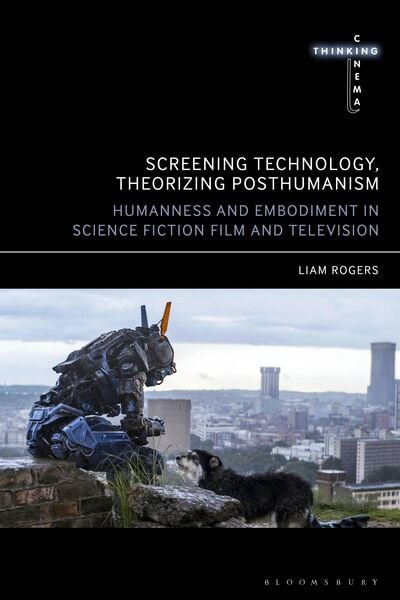
Produktbild: Screening Technology, Theorizing Posthumanism

Screening Technology, Theorizing Posthumanism Humanness and Embodiment in Science Fiction Film and Television

Aus der Reihe Thinking Cinema

123,99 €

inkl. gesetzl. MwSt., Versandkostenfrei


Beschreibung

Screening Technology, Theorizing Posthumanismexamines how different embodiments of technological life come to be inscribed with qualities of humanness across mainstream film and television, so as to understand the ways in which posthumanism emerges onscreen. Now more than ever, we are being told that...

Beschreibung

Screening Technology, Theorizing Posthumanismexamines how different embodiments of technological life come to be inscribed with qualities of humanness across mainstream film and television, so as to understand the ways in which posthumanism emerges onscreen. Now more than ever, we are being told that technologies capable of performing as though they were human are being developed at an unprecedented rate. In order to make sense of the wide-ranging social, ethical and philosophical ramifications of such technologies, cultural commentators, researchers and philosophers are turning to science fiction for answers. Rather than dismiss those who do so, this book builds upon this critical impulse to consider how film and television respond to the question: what does it mean to be human in an age of technological crisis? Liam Rogers makes the case for a film-and-television-philosophy approach to examine what mainstream science fiction can offer posthumanism in its technoscientific visions of the future. Through close readings of popular films such as Her(2013), WALL-E(2008) and CHAPPiE(2015), as well as series like Black Mirror(2011-present) and My Holo Love(2020), it considers what it might mean to theorize posthumanism onscreen, what screening technology looks like, and, more importantly, why it matters. In doing so, this book casts posthumanism's relationship to screened media in new light. Locating the posthumanist potential within voice-, touch- and movement-based humanness, this book demonstrates the audio-visual ways in which films and television series navigate us through the current technoscientific landscape by offering us distinctly paradoxical theorizations of what it means to be human. It is this paradoxicality that ultimately complicates, challenges and advances posthumanism as a philosophy.

Produktdetails

Einband

Gebundene Ausgabe

Erscheinungsdatum

20.08.2026

Abbildungen

25 bw illus

Verlag Bloomsbury

Produktdetails

Einband

Gebundene Ausgabe

Erscheinungsdatum

20.08.2026

Abbildungen

25 bw illus

Verlag Bloomsbury
Seitenzahl

294

Maße (L/B/H)

23,5/15,7/2 cm

Gewicht

532 g

Sprache

Englisch

EAN

9798765162941

Herstelleradresse

Libri GmbH
Europaallee 1
36244 Bad Hersfeld
DE

Email: gpsr@libri.de

Ein neues Kapitel für Ihre Bücher

Ein neues Kapitel für Ihre Bücher

Schenken Sie Ihren alten Schätzen ein zweites Leben und erhalten Sie dafür eine Thalia Geschenkkarte.

Jetzt verkaufen
Jetzt verkaufen

Noch keine Bewertungen vorhanden

Verfassen Sie die erste Bewertung zu diesem Artikel

Helfen Sie anderen Kundinnen und Kunden durch Ihre Meinung.

Kundinnen und Kunden meinen

Bewertungen (0)

Die Leseprobe wird geladen.
  • Produktbild: Screening Technology, Theorizing Posthumanism
  • List of Figures
    Acknowledgements

    Introduction
    1. The Posthuman Imaginary
    2. The Vocal Humanness of 'Disembodied' AIs
    3. Presence, Tactility and the Real: Imaging Technologies Onscreen
    4. The Visual Surface of Robots: Theorizing Otherness Through Movement
    Conclusion

    Bibliography
    Filmography/Teleography
    Notes
    Index