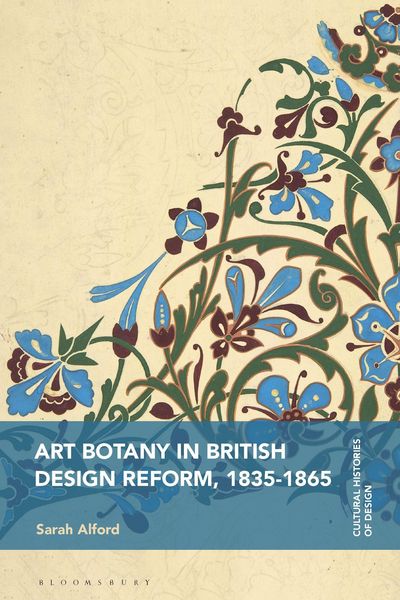
Art Botany in British Design Reform, 1835-1865
-
- Englisch ausgewählt
35,99 €
inkl. gesetzl. MwSt.,
Beschreibung
Produktdetails
Einband
Taschenbuch
Erscheinungsdatum
21.01.2027
Abbildungen
61 colour illus
Herausgeber
Grace Lees-Maffei + weitereVerlag
Bloomsbury AcademicSeitenzahl
224
Maße (L/B/H)
23,4/15,6/2,5 cm
Gewicht
454 g
Sprache
Englisch
ISBN
978-1-350-35053-3
This richly illustrated book, now in full colour, reveals the important role that botanical science played in the emergence of Victorian design theory, drawing on the fields of design history and the history of science.
In early 19th-century Britain, a rapid influx of plants from other countries began to confuse the orders of classification. As these new specimens arrived in nurseries and conservatories, botanists revised and promoted a new taxonomy: the Natural System. In parallel, in 1835, British manufacturers faced a government inquiry in order to improve the output of the British design industry. They needed a nationally identifiable design aesthetic and the inquiry led to the creation of the Government Schools of Design and the Design Reform movement. This book explores how, whilst botanists used drawings to clarify new systems of plant classification, designers learnt 'art botany', the practice of basing decorative form and ornament on the hidden, natural laws that govern plant growth and structure. Design reformers used botany as a model for how to create and identify what is new and incorporate it into what was already familiar and meaningful, all within the purview of developing a professional field of practice.
Sarah Alford provides a rich, interdisciplinary study of how the fields of design and botanical science came together. Through a framework of material culture, Alford sheds new light on the work of leading botanists, designers and illustrators such as Sarah Drake, John Lindley, Richard Redgrave, Owen Jones and Christopher Dresser. This book reveals how the designation of what design reformers deemed appropriate for the surface decoration of material structures as varied as carpets, jugs, wallpaper, and furniture, was an embrace of botanical science as a source of fantasy and imagination.
Ein neues Kapitel für Ihre Bücher
Ein neues Kapitel für Ihre Bücher
Schenken Sie Ihren alten Schätzen ein zweites Leben und erhalten dafür eine Thalia Geschenkkarte.
Noch keine Bewertungen vorhanden
Verfassen Sie die erste Bewertung zu diesem Artikel
Helfen Sie anderen Kundinnen und Kunden durch Ihre Meinung.
Kurze Frage zu unserer Seite
Vielen Dank für Ihr Feedback
Wir nutzen Ihr Feedback, um unsere Produktseiten zu verbessern. Bitte haben Sie Verständnis, dass wir Ihnen keine Rückmeldung geben können. Falls Sie Kontakt mit uns aufnehmen möchten, können Sie sich aber gerne an unseren Kund*innenservice wenden.
zum Kundenservice