















































KI-Beratung Beta

Gutscheinbedingungen

Gültig bis 11.11.2026 | Gültig für Spielzeug, Filme, Musik, Software, Games, Geschenke & Trends, Schreibwaren, Hörbücher und Hörbuch-Downloads (außer Abo & Shelfies), gebrauchte Bücher, nicht preisgebundene Bücher und Kalender | Einlösbar unter thalia.de und in der Thalia App | Click & Collect nur mit Online-Zahlung (Paypal/Kreditkarte) vorab | Einzelne Artikel können ausgeschlossen sein | Nicht kombinierbar mit anderen Gutscheinen oder Preisaktionen | Nur einmal pro Einkauf einlösbar | Gutschein wird auf max. 500€ Bestellwert angerechnet | Keine Barauszahlung | Digitale Hörbücher nur für Android  | Nicht gültig für preisgebundene Artikel (aufgrund der Buchpreisbindung sind Gutscheine nicht auf Bücher, eBooks, Presse einlösbar), tolino eReader & Zubehör, Abonnements & Flatrates, Geschenkkarten, Versandkosten und Services

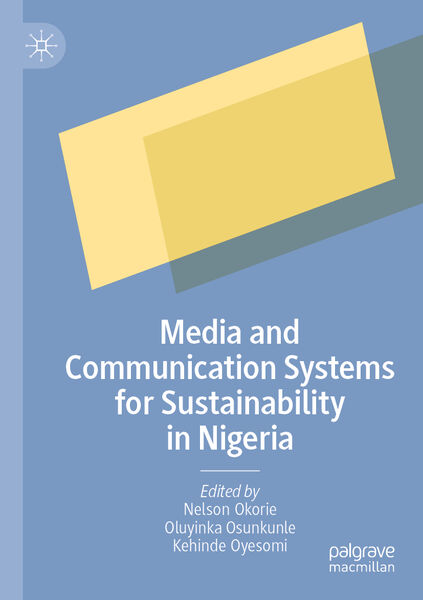
Produktbild: Media and Communication Systems for Sustainability in Nigeria
- 10%

Media and Communication Systems for Sustainability in Nigeria

10% sparen

152,99 € UVP 171,19 €

inkl. gesetzl. MwSt., Versandkostenfrei


Beschreibung

This book is a compendium of rigorous and original research, exploring the use of media systems and communication techniques to mitigate sustainable development issues in Nigeria. The novelty of this book project is in line with the Sustainable Development Goals (SDGs), notably education, health, economy,...

Beschreibung

This book is a compendium of rigorous and original research, exploring the use of media systems and communication techniques to mitigate sustainable development issues in Nigeria. The novelty of this book project is in line with the Sustainable Development Goals (SDGs), notably education, health, economy, and security. In addition, this book project also explores how specialized areas of communication, such as development communication, health communication, and intercultural communication can be utilized to promote cultural agenda, policy enactments, and national development projects in Nigeria.

Portrait

Nelson Okorie is an Associate Professor and Director of the Centre for Media and Communication Research (CMCR) at Pan Atlantic University, Nigeria.

Oluyinka Osunkunle is an Associate Professor in the Department of Communication, Faculty of Social Science and Humanities, University of Fort Hare, Alice, South Africa.

Kehinde Oyesomi is Associate Professor in the Department of Communications, Covenant University, Nigeria.

Produktdetails

Einband

Taschenbuch

Erscheinungsdatum

31.01.2026

Herausgeber Nelson Okorie + weitere
Verlag Springer

Produktdetails

Einband

Taschenbuch

Erscheinungsdatum

31.01.2026

Herausgeber
Verlag Springer
Seitenzahl

541

Maße (L/B/H)

21/14,8/3,1 cm

Gewicht

730 g

Sprache

Englisch

ISBN

978-3-031-75223-0

Herstelleradresse

Springer-Verlag GmbH
Tiergartenstr. 17
69121 Heidelberg
DE

Email: ProductSafety@springernature.com

Ein neues Kapitel für Ihre Bücher

Ein neues Kapitel für Ihre Bücher

Schenken Sie Ihren alten Schätzen ein zweites Leben und erhalten Sie dafür eine Thalia Geschenkkarte.

Jetzt verkaufen
Jetzt verkaufen

Noch keine Bewertungen vorhanden

Verfassen Sie die erste Bewertung zu diesem Artikel

Helfen Sie anderen Kundinnen und Kunden durch Ihre Meinung.

Kundinnen und Kunden meinen

Bewertungen (0)

  • Produktbild: Media and Communication Systems for Sustainability in Nigeria
  • Chapter 1: Achieveing sustainability in Nigeria: An interplay of media and communication systems.- Chapter 2: Media role in humanizing poverty through ethical storytelling in Nigeria.- Chapter 3: Communication of development strategies rowards sustainable health .- development and poverty reduction intiatives.- Chapter 4: Media roles and effective communication for food security in Nigeria.- Chapter 5: SDG 13: A content analysis of WAEC and SSCE curriculum.- Chapter 6: Use of social media for climate change mitigation and adaptation education in Nigeria.- Chapter 7: Strategies to instill wnvironmental consciousness and commitment in future  .- generation.- Chapter 8: Effectiveness of environmental education and awareness campaigns in.- fostering commitments and behavior change among Nigerians.- Chapter 9: Climate change, content framing and its implication for sustainability in.- Nigeria.- Chapter 10: Demystifying the role of artificial intelligence in the figital communication strategy of Nigeria’s economic industry.- Chapter 11: Film, social media violence, govenance and insecurity in Nigeria.- Chapter 12: Evaluation of Nigerian media’s development communication agenda in post-COVID era.- Chapter 13: COVID-19 vaccine infodermic among rural dwellers: Implications for sustainable health development in post-COVID-19 era .- Chapter 14: Media and the promotion of sustainable health in Nigeria: The COVID-19 .- experience.- Chapter 15: Communixation effectiveness of media health advisory messages for the .- vulnerables in managing risks associated with diseases.- Chapter 16: Information sources and family planning messages among women in child bearing ages in Lagos,Nigeria.- Chapter 17: The Marrakesh treaty and state of engagement towards inclusive publishing in Nigeria.- Chapter 18: PoPortrayal of violent attacks in Nigeria represented in selected Nollywood films.- Chapter 19: Media framing and public opinion on Chinese funded transportation infrastrucuture in Nigeria.- Chapter 20:Broadband penetration, information seeking behavior and streaming technologies adoption patterns among online viewers in Nigeria.- Chapter 21: #NotTooYoungToRun: Nigerian youth are incapable of winning elections.- Chapter 22: Conceptual vontext and challenges of elearning practices for journalism education in Nigeria higher institutions.- Chapter 23: Online teaching and sustainable learning experience for undergraduates: Ojo,  implications foor post-COVID era.- Chapter 24: Public engagement in social media advocacy and cirizen journalism practice in Nigeria.- Chapter 25: Digital social capital, occupational migration and the Japa syndrome in Nigeria: Impediments for sustainability in the health sector.- Chapter 26: Perception of ARCON’s ban on the use of foreign elements in Nigerian advertisement by advertising professionals: Implications for sustainable development.