















































KI-Beratung Beta

Gutscheinbedingungen

Gültig bis 30.11.2026 | Gültig für nicht preisgebundene fremdsprachige Bücher | Einzelne Artikel können ausgeschlossen sein | Online auf thalia.de und in der Thalia App einlösbar | Click & Collect nur mit Online-Zahlung (Paypal/Kreditkarte) vorab | Nicht kombinierbar mit anderen Gutscheinen oder Preisaktionen | Nur einmal pro Einkauf einlösbar | Gutschein wird auf max. 500€ Bestellwert angerechnet | Keine Barauszahlung | Nicht gültig für Versandkosten und Services

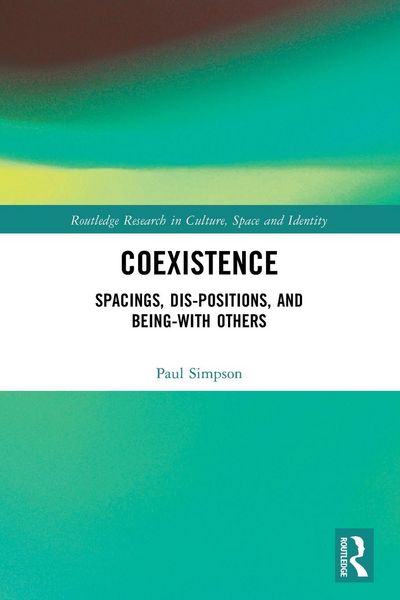
Produktbild: Coexistence

Coexistence Spacings, Dis-positions, and Being-with Others

66,99 €

inkl. gesetzl. MwSt., Versandkostenfrei


Beschreibung

This book aims to develop an account of living together with difference which recognises the tension that we are inescapably with others - both human and non-human - but at the same time are always differing from and with those with whom we find ourselves.

A concern for coexistence and questions over...

Beschreibung

This book aims to develop an account of living together with difference which recognises the tension that we are inescapably with others - both human and non-human - but at the same time are always differing from and with those with whom we find ourselves.

A concern for coexistence and questions over how we might live together have been raised and approached from a host of conceptual starting points in recent times, including via calls for a rethinking of communism today, the articulation of forms of 'cosmopolitics' or 'pluralism', the re-figuring of understandings of ecology as dark or feminist, amongst others. This book responds to such questions of coexistence by developing what it calls a 'co-existential analytic'. In doing so, this book introduces a range of post-phenomenological thought which offers means for thinking about such questions of living together with difference. The thought of Emanuel Levinas on the face of the other, Jean-Luc Nancy on being as being-with, Roberto Esposito on the munis, and Michel Henry on pathic auto-affection are introduced and critically reflected upon in terms of what they offer for thinking about such coexistence. Alongside these conceptual starting points, a series of encounters - with cinema, everyday life, politics, and literature - are used to animate and illustration the discussion. Ultimately, the book argues for a 'spacing' of subjectivities with that world and those encountered within it.

This book is intended primarily for researchers and postgraduate students interested in questions of identity, difference, and subjectivity. It will be of interest to those in the fields of social and cultural geography, sociology, social theory, and cultural studies.

Produktdetails

Einband

Taschenbuch

Erscheinungsdatum

21.05.2026

Abbildungen

schwarz-weiss Illustrationen, Raster,schwarz-weiss

Verlag Taylor and Francis

Produktdetails

Einband

Taschenbuch

Erscheinungsdatum

21.05.2026

Abbildungen

schwarz-weiss Illustrationen, Raster,schwarz-weiss

Verlag Taylor and Francis
Seitenzahl

166

Maße (L/B/H)

23,4/15,6/1 cm

Gewicht

259 g

Sprache

Englisch

ISBN

978-0-367-55882-6

Herstelleradresse

Libri GmbH
Europaallee 1
36244 Bad Hersfeld
DE

Email: gpsr@libri.de

Ein neues Kapitel für Ihre Bücher

Ein neues Kapitel für Ihre Bücher

Schenken Sie Ihren alten Schätzen ein zweites Leben und erhalten Sie dafür eine Thalia Geschenkkarte.

Jetzt verkaufen
Jetzt verkaufen

Noch keine Bewertungen vorhanden

Verfassen Sie die erste Bewertung zu diesem Artikel

Helfen Sie anderen Kundinnen und Kunden durch Ihre Meinung.

Kundinnen und Kunden meinen

Bewertungen (0)

Die Leseprobe wird geladen.
  • Produktbild: Coexistence
  • Acknowledgments

    Introduction: Rethinking subjectivity in the spacing of the world

    Chapter 1: The curvature in relating: Levinas and the face of the Other

    Chapter 2: Being-with others: Nancy and the presencing of self and other

    Chapter 3: Immunizing the self from others: Esposito and the disturbance of the munus

    Chapter 4: The impression of the appearing world: Henry, auto-affection, and life

    Conclusion: Spacing self; Distributing us

    Bibliography