















































KI-Beratung Beta

Gutscheinbedingungen

Gültig bis 30.11.2026 | Gültig für nicht preisgebundene fremdsprachige Bücher | Einzelne Artikel können ausgeschlossen sein | Online auf thalia.de und in der Thalia App einlösbar | Click & Collect nur mit Online-Zahlung (Paypal/Kreditkarte) vorab | Nicht kombinierbar mit anderen Gutscheinen oder Preisaktionen | Nur einmal pro Einkauf einlösbar | Gutschein wird auf max. 500€ Bestellwert angerechnet | Keine Barauszahlung | Nicht gültig für Versandkosten und Services

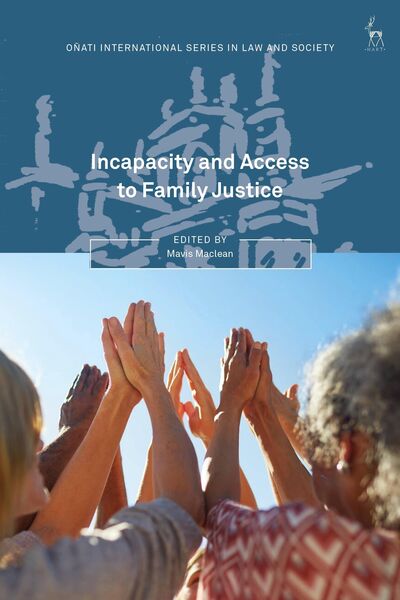
Produktbild: Incapacity and Access to Family Justice

Incapacity and Access to Family Justice

118,99 €

inkl. gesetzl. MwSt., Versandkostenfrei


Beschreibung

This edited collection explores the question of how those with limited capacity are enabled to take their part as members of society within the context of both a legal framework and the expectations of their family and community. The book is divided into three parts, firstly looking at the current legal...

Beschreibung

This edited collection explores the question of how those with limited capacity are enabled to take their part as members of society within the context of both a legal framework and the expectations of their family and community. The book is divided into three parts, firstly looking at the current legal position on incapacity in a number of jurisdictions. It discusses the recent European project FLEUR, and the associated debates developing around whether legislation dealing with incapacity should aim to support or control the vulnerable person. Secondly, the book looks at the experience of families with vulnerable members. Chapters examine developments in Australia, Spain, Bulgaria and Argentina, while part three looks at France, Turkey, Canada, the Netherlands, Poland and Ukraine. It asks questions such as: What are the contemporary demands for full financial protection by the state in the Netherlands? What can happen in an emergency? How did the Polish system provide for the needs of refugees in wartime, in the case of the recent flight from Ukraine into Poland? An important dimension is added to the debate, asking how we can provide support and control within a social network or group whose members have different aims and needs in a family or a community.

Produktdetails

Einband

Gebundene Ausgabe

Erscheinungsdatum

01.08.2026

Herausgeber Rosemary Hunter + weitere
Verlag Bloomsbury Academic

Produktdetails

Einband

Gebundene Ausgabe

Erscheinungsdatum

01.08.2026

Herausgeber
Verlag Bloomsbury Academic
Seitenzahl

236

Maße (L/B/H)

24/16,1/1,7 cm

Gewicht

472 g

Sprache

Englisch

ISBN

978-1-5099-8342-1

Herstelleradresse

Libri GmbH
Europaallee 1
36244 Bad Hersfeld
DE

Email: gpsr@libri.de

Ein neues Kapitel für Ihre Bücher

Ein neues Kapitel für Ihre Bücher

Schenken Sie Ihren alten Schätzen ein zweites Leben und erhalten Sie dafür eine Thalia Geschenkkarte.

Jetzt verkaufen
Jetzt verkaufen

Noch keine Bewertungen vorhanden

Verfassen Sie die erste Bewertung zu diesem Artikel

Helfen Sie anderen Kundinnen und Kunden durch Ihre Meinung.

Kundinnen und Kunden meinen

Bewertungen (0)

  • Produktbild: Incapacity and Access to Family Justice
  • Part One: Introduction and Existing Legal Frameworks

    1. Introduction, Mavis Maclean (University of Oxford, UK)
    2. Access to Family Justice and Mental Incapacity in England and Wales: The Role of the Official Solicitor, Sarah Castle (Official Solicitor and Public Trustee, UK)
    3. The FL-EUR Comparative Research Project on Empowerment and Protection of Vulnerable Adults, Rieneke Stelma-Roorda (Vrije Universiteit, the Netherlands), Masha Antokolskaia (Vrije Universiteit, the Netherlands), and Jens M Scherpe (University of Aalborg, Denmark)
    4. Parents with Mental Incapacities - Risk Factor for Children or Persons with Rights to Support?, Thomas Meysen (University of Heidelberg, Germany)

    Part Two: Legislative Change

    5. Protecting whose Interests? Exploring the Operation of the Guardianship and Administration Act 2019 (Vic), Richard Ingleby and Belinda Fehlberg (University of Western Australia)
    6. The Implementation of the Convention on the Rights of Persons with Disabilities in Spain: The State Law 8/2021 with Special Reference to the Aragon Regional Law, Teresa Picontó Novales (University of Zaragoza, Spain)
    7. Moment for Change in Bulgaria? The Bill on Persons and Support Measures, Velina Todorova (University of Plovdiv, Bulgaria)
    8. Adolescents and their Right to Access to Justice: The Case of Adolescents in Care Homes in Buenos Aires, Argentina, Julieta Marotta (Maastricht University, the Netherlands) and Laura Lora (University of Buenos Aires, Argentina)

    Part Three: Underlying Policies

    9. Legal Incapacities in France: Who is in Charge?, Benoit Bastard (École Supérieure de
    Paris Sacle, France)
    10. Considering People without Legal Capacity in Turkey, Verda Irtis (Université libre de Bruxelles, Belgium)
    11. The Impossible Job of the Guardian and the Client Whose Assets are Placed under Guardianship, B Dijksterhuis (University of Amsterdam, the Netherlands), J Landman (Oud-Beijerland, the Netherlands) and A Vaandering-Hoekstra (Klaver & Janssen, the Netherlands)
    12. Unaccompanied Ukrainian Children and Separated Ukrainian Children in Poland, Malgorzata Fuszara and Jacek Kurczewski (University of Warsaw, Poland)
    13. Closing Observations, Mavis Maclean (University of Oxford, UK)