















































KI-Beratung Beta

Gutscheinbedingungen

Gültig bis 30.11.2026 | Gültig für nicht preisgebundene fremdsprachige Bücher | Einzelne Artikel können ausgeschlossen sein | Online auf thalia.de und in der Thalia App einlösbar | Click & Collect nur mit Online-Zahlung (Paypal/Kreditkarte) vorab | Nicht kombinierbar mit anderen Gutscheinen oder Preisaktionen | Nur einmal pro Einkauf einlösbar | Gutschein wird auf max. 500€ Bestellwert angerechnet | Keine Barauszahlung | Nicht gültig für Versandkosten und Services

Produktbild: Recognizing La Cosa Nostra
Vorbesteller Neu

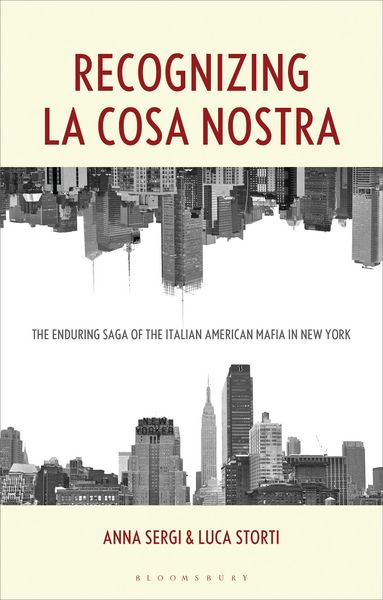
Recognizing La Cosa Nostra The Enduring Saga of the Italian American Mafia in New York

91,99 €

inkl. gesetzl. MwSt., Versandkostenfrei


Beschreibung

Force may establish power, but recognition is what sustains it. This book offers a contemporary re-examination of La Cosa Nostra (LCN) in New York City, moving beyond outdated images of a monolithic criminal hierarchy to reveal startlingly flexible and adaptive social formations. Drawing on judicial records,...

Beschreibung

Force may establish power, but recognition is what sustains it.
This book offers a contemporary re-examination of La Cosa Nostra (LCN) in New York City, moving beyond outdated images of a monolithic criminal hierarchy to reveal startlingly flexible and adaptive social formations.
Drawing on judicial records, investigative findings, and informal interviews, Anna Sergi and Luca Storti argue that the Five Families' continued relevance depends as much on symbolic resources as on material capabilities. Using a framework centered on social recognition and reputation, the book shows how LCN functions as a "heritage brand," in which names, rituals, and circulating narratives operate as durable currencies that structure criminal relationships, regulate markets, and reproduce authority across time and space.
The authors demonstrate how the families now operate through semi-autonomous crews and pragmatic cross-family collaboration, where formal membership enhances credibility without enforcing rigid command-and-control. Case studies-from gambling schemes to labor union infiltration-illustrate how selective territorial engagement, strategic visibility, and narrative management enable the mafia to extract value and broker protection while minimizing overt violence.
The analysis also highlights enduring transnational ties between New York and Sicily, showing how shared rituals, migration narratives, and cross-border brokerage transform symbolic capital into operational capacity. These connections reinforce a mutually sustaining relationship between the American and Sicilian branches, anchoring contemporary practices in a transatlantic system of meaning and exchange.
Recognizing La Cosa Nostra reframes the modern mafia as a system sustained by "soft infrastructure"-stories, reputations, and shared cultural knowledge-rather than brute force alone. In doing so, it invites scholars and practitioners alike to rethink organized crime as a form of governance rooted in recognition and legitimacy, not merely corruption and coercion.

Produktdetails

Einband

Gebundene Ausgabe

Erscheinungsdatum

04.02.2027

Abbildungen

6 tables

Verlag Bloomsbury

Produktdetails

Einband

Gebundene Ausgabe

Erscheinungsdatum

04.02.2027

Abbildungen

6 tables

Verlag Bloomsbury
Seitenzahl

168

Maße (L/B/H)

22,9/15,2/2,5 cm

Gewicht

454 g

Sprache

Englisch

ISBN

978-1-5381-9920-6

Herstelleradresse

Libri GmbH
Europaallee 1
36244 Bad Hersfeld
DE

Email: gpsr@libri.de

Ein neues Kapitel für Ihre Bücher

Ein neues Kapitel für Ihre Bücher

Schenken Sie Ihren alten Schätzen ein zweites Leben und erhalten Sie dafür eine Thalia Geschenkkarte.

Jetzt verkaufen
Jetzt verkaufen

Noch keine Bewertungen vorhanden

Verfassen Sie die erste Bewertung zu diesem Artikel

Helfen Sie anderen Kundinnen und Kunden durch Ihre Meinung.

Kundinnen und Kunden meinen

Bewertungen (0)

Die Leseprobe wird geladen.
  • Produktbild: Recognizing La Cosa Nostra
  • List of Tables
    Acknowledgments
    Introduction
    Chapter 1. Mafias and social recognition
    Chapter 2. La Cosa Nostra in New York: A diachronic account
    Chapter 3. The status of the five La Cosa Nostra families in New York
    Chapter 4. Reputation, visibility, territory, and the need to tell stories
    Chapter 5. Heritage brands, the 'old' ways, and the politics of nostalgia
    Conclusion
    References
    Index
    About the Authors