















































KI-Beratung Beta

Gutscheinbedingungen

Gültig bis 11.11.2026 | Gültig für Spielzeug, Filme, Musik, Software, Games, Geschenke & Trends, Schreibwaren, Hörbücher und Hörbuch-Downloads (außer Abo & Shelfies), gebrauchte Bücher, nicht preisgebundene Bücher und Kalender | Einlösbar unter thalia.de und in der Thalia App | Click & Collect nur mit Online-Zahlung (Paypal/Kreditkarte) vorab | Einzelne Artikel können ausgeschlossen sein | Nicht kombinierbar mit anderen Gutscheinen oder Preisaktionen | Nur einmal pro Einkauf einlösbar | Gutschein wird auf max. 500€ Bestellwert angerechnet | Keine Barauszahlung | Digitale Hörbücher nur für Android  | Nicht gültig für preisgebundene Artikel (aufgrund der Buchpreisbindung sind Gutscheine nicht auf Bücher, eBooks, Presse einlösbar), tolino eReader & Zubehör, Abonnements & Flatrates, Geschenkkarten, Versandkosten und Services

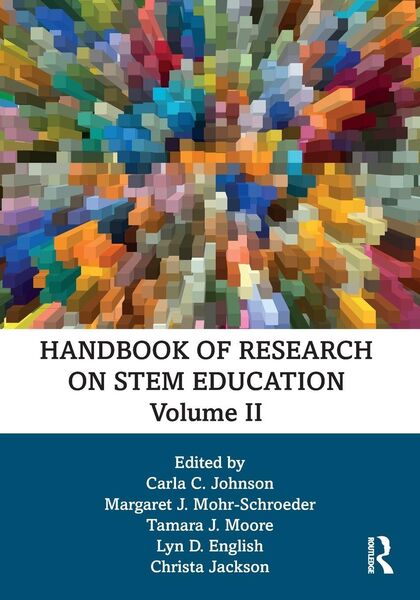
Produktbild: Handbook of Research on STEM Education, Volume II
Vorbesteller Neu

Handbook of Research on STEM Education, Volume II

153,99 €

inkl. gesetzl. MwSt., Versandkostenfrei


Beschreibung

The Handbook of Research on STEM Education, Volume II brings together leading global scholars to examine how STEM education is evolving across policy, research, and practice. It introduces chapters on newly salient topics such as computational thinking, evaluation, and global perspectives and substantially...

Beschreibung

The Handbook of Research on STEM Education, Volume II brings together leading global scholars to examine how STEM education is evolving across policy, research, and practice. It introduces chapters on newly salient topics such as computational thinking, evaluation, and global perspectives and substantially updates core areas from the first volume, including STEM policy, STEM integration, equity, and research methods. Organized into six thematic sections, this volume addresses emerging frameworks for STEM integration, research methodologies, equity and participation, PK-12 teaching and learning, teacher education, postsecondary and informal STEM, and the use of evidence to inform future directions. Chapters explore critical topics such as intersectionality, asset-oriented and justice-focused approaches, early childhood STEM, professional development models, informal learning environments, program evaluation, and end with a global call to action on STEM reform.

This volume is intended for researchers, graduate students, teacher educators, policymakers, and practitioners who seek a comprehensive, research-based understanding of contemporary STEM education. Readers will benefit from synthesized research findings, conceptual frameworks, and methodological guidance that support both scholarly inquiry and applied decision-making. By foregrounding issues of equity, access, systems change, accountability, and evidence-based practice, this handbook equips readers to design, study, evaluate, and implement more inclusive and effective STEM learning environments. Ultimately, Volume II serves both as a reference work and as a catalyst for advancing STEM education in ways that respond to societal needs, workforce development, and the diverse strengths of learners around the world.

Portrait

Carla C. Johnson is Professor of STEM and AI Education and the Executive Director of the AI Academy at North Carolina State University, USA.

Margaret J. Mohr-Schroeder is Professor of STEM Education and the Vice Provost for Academic Affairs and Innovation at Kansas State University, USA.

Tamara J. Moore is the Crowley Family Professor of Engineering Education, the Executive Co-Director of INSPIRE Research Institute for Pre-College Engineering, and the Director of SCALE K-12 at Purdue University, USA.

Lyn D. English is Professor of STEM Education at Queensland University of Technology, Australia.

Christa Jackson is Professor of Educational Studies at Saint Louis University, USA.

Produktdetails

Einband

Taschenbuch

Erscheinungsdatum

30.11.2026

Abbildungen

schwarz-weiss Illustrationen, Raster,schwarz-weiss, Zeichnungen, schwarz-weiss, Tabellen, schwarz-weiss

Herausgeber Carla C. Johnson + weitere

Produktdetails

Einband

Taschenbuch

Erscheinungsdatum

30.11.2026

Abbildungen

schwarz-weiss Illustrationen, Raster,schwarz-weiss, Zeichnungen, schwarz-weiss, Tabellen, schwarz-weiss

Herausgeber
Verlag Taylor and Francis
Seitenzahl

482

Maße (L/B)

25,4/17,8 cm

Sprache

Englisch

ISBN

978-1-03-278972-9

Herstelleradresse

Libri GmbH
Europaallee 1
36244 Bad Hersfeld
DE

Email: gpsr@libri.de

Ein neues Kapitel für Ihre Bücher

Ein neues Kapitel für Ihre Bücher

Schenken Sie Ihren alten Schätzen ein zweites Leben und erhalten Sie dafür eine Thalia Geschenkkarte.

Jetzt verkaufen
Jetzt verkaufen

Noch keine Bewertungen vorhanden

Verfassen Sie die erste Bewertung zu diesem Artikel

Helfen Sie anderen Kundinnen und Kunden durch Ihre Meinung.

Kundinnen und Kunden meinen

Bewertungen (0)

  • Produktbild: Handbook of Research on STEM Education, Volume II
  • Section 1: Evolving Policies, Approaches, Methods, and Understandings in STEM Education 1. The State of STEM Education: Progress, Lessons Learned, and the Future 2. STEM Integration Revisited: Evolving Frameworks and Definitions 3. A Cradle to Grave Model of STEM Education in Support of Workforce Development 4. Methodologies, Methods, and Approaches for Integrative STEM Education Research Section 2: Participation in STEM 5. Intersectionality in STEM Education Research 6. Asset-oriented STEM Education Practices that Engage Racialized Learners 7. Gender Justice in STEM Education Research and Practice 8. The Landscape of Diversity, Equity, Inclusion, and Access in Postsecondary STEM Education in the United States Section 3: STEM Teaching and Learning in PK-12 9. Design Learning in STEM Education 10. Computational Thinking in K-12 Education 11. Opening Doors to STEM Integration: Global Perspectives on Inclusive Instructional Approaches for Increasing Access and Participation 12. The Importance of Early Childhood STEM Education Section 4: STEM Teacher Education 13. Externships and Research Experiences as Pathways to Teacher Development 14. Systemic Change in STEM Teacher Preparation: Transformative Reformation and Partnerships 15. Evidence-based Models for Effective Integrated STEM Professional Development Section 5: Postsecondary and Out-of-School STEM 16. Active Learning and Student Engagement in STEM Postsecondary Contexts 17. Grand Challenges Across Discipline-Based Educational Research (DBER): Expanding from Individuals to Systems, Culture, and Structures 18. Informal STEM Education Environments & Outcomes Section 6: Using Evidence to Inform Future Work in STEM 19. Integrated STEM School Models: Student Outcomes and Teacher Characteristics 20. Evaluating STEM Investments: Transparency and Accountability 21. A Global Call to Transform STEM Education: Challenges and Opportunities Around the Globe