















































Beschreibung
Produktdetails
Einband
Gebundene Ausgabe
Erscheinungsdatum
24.02.2027
Abbildungen
XXI, 486 p. 248 illus., 54 illus. in color.
Verlag
Springer SingaporeSeitenzahl
486
Maße (B/H)
15,5/23,5 cm
Sprache
Englisch
ISBN
978-981-9250-41-7
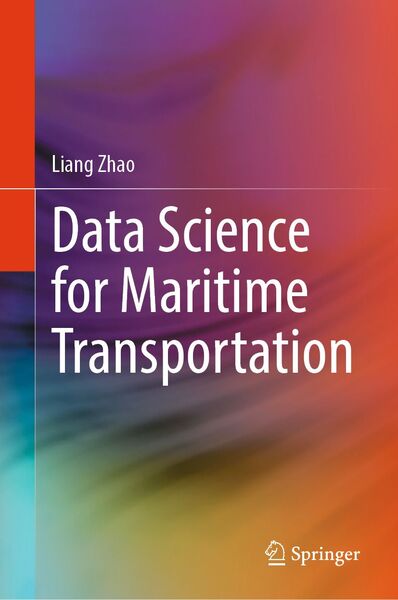
This book provides a comprehensive and application-oriented introduction to data science, machine learning, and deep learning methods for maritime transportation. It is written to help readers understand how maritime data can be processed, analyzed, modeled, and used to support digitalization for shipping industry. The book is organized into two parts. Part I, Fundamentals and Concepts, introduces the theoretical and methodological foundations required for maritime data science. It begins with maritime transportation data sources, structures, and characteristics, followed by essential data preprocessing techniques. It then presents methods for vessel trajectory representation, transformation, and analysis. The part also introduces the fundamental concepts of machine learning and deep learning, with a focus on their relevance to maritime applications. The final chapter of this part provides background knowledge on vessel maneuvering behavior and motion dynamics, establishing a bridge between physical understanding and data-driven modeling. Part II, Practical Applications and Case Studies, focuses on representative real-world problems in maritime data science and intelligent shipping. It covers trajectory clustering and pattern mining, deep learning-based vessel trajectory forecasting, anomaly detection using reconstruction methods, data-driven and physics-informed modeling of vessel propulsion power, regional ocean wave prediction, maritime traffic flow forecasting using graph neural networks, and vessel estimated time of arrival (ETA) prediction using machine learning. Each application chapter is designed as a self-contained case study that combines problem formulation, modeling methodology, implementation details, and practical interpretation. The book is suitable for graduate students, researchers, and practitioners in academia and industry. It can be used both as a structured textbook and as a practical reference for self-study. With hands-on Python examples and source code provided through the author’s GitHub repository, the book enables readers to reproduce key methods, understand maritime data characteristics, select appropriate modeling approaches, and develop data-driven solutions for real operational scenarios in maritime transportation.
Ein neues Kapitel für Ihre Bücher
Ein neues Kapitel für Ihre Bücher
Schenken Sie Ihren alten Schätzen ein zweites Leben und erhalten Sie dafür eine Thalia Geschenkkarte.
Noch keine Bewertungen vorhanden
Verfassen Sie die erste Bewertung zu diesem Artikel
Helfen Sie anderen Kundinnen und Kunden durch Ihre Meinung.
Kurze Frage zu unserer Seite
Vielen Dank für Ihr Feedback
Wir nutzen Ihr Feedback, um unsere Produktseiten zu verbessern. Bitte haben Sie Verständnis, dass wir Ihnen keine Rückmeldung geben können. Falls Sie Kontakt mit uns aufnehmen möchten, können Sie sich aber gerne an unseren Kund*innenservice wenden.
zum Kundenservice