















































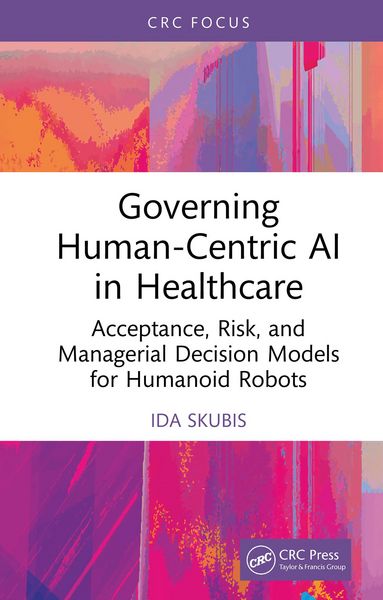
Governing Human-Centric AI in Healthcare Acceptance, Risk, and Managerial Decision Models for Humanoid Robots
28,49 €
inkl. gesetzl. MwSt.Beschreibung
Produktdetails
Format
Kopierschutz
Nein
Family Sharing
Nein
Text-to-Speech
Nein
Erscheinungsdatum
23.09.2026
Verlag
Taylor & Francis eBooksSeitenzahl
92 (Printausgabe)
Dateigröße
1585 KB
Auflage
1. Auflage
Sprache
Englisch
EAN
9781042521234
The debate about artificial intelligence (AI) in healthcare is no longer focused on whether AI will be used, but on how it should be governed. Across Europe and beyond, policymakers, healthcare organizations, and technology developers are searching for ways to ensure that AI systems remain accountable, transparent, and aligned with human values. The European Union's Artificial Intelligence Act represents one of the most ambitious attempts to address these challenges through a human-centric approach. Yet an important question remains unanswered: what does human-centric AI actually look like when organizations begin implementing AI technologies in practice?
This book explores that question in the context of healthcare and humanoid robotics. Rather than examining regulation or technology in isolation, it brings together perspectives from AI governance, management, healthcare, and technology acceptance research. The discussion moves from the principles embedded in the AI Act to the realities of organizational decision-making, showing how ideas such as human dignity, human oversight, trust, inclusivity, and accountability influence the adoption of emerging technologies.
A central theme running throughout the book is the gap between technological possibility and organizational readiness. Drawing on empirical research involving 527 respondents - current and future decision-makers, the book examines perceptions of humanoid robots in healthcare and identifies the factors that encourage or discourage their adoption. The findings reveal that acceptance is shaped not only by expected benefits but also by concerns about trust, responsibility, ethics, patient safety, and the preservation of human interaction in care.
The book also proposes two original concepts: the Human-Centric Robot Acceptance Index (HCRAI), which evaluates readiness for humanoid robot adoption, and the Risk Gradient Model of Humanoid Robot Task Acceptance, which explains why some healthcare tasks are considered more suitable for robots than others. Together, these contributions offer new ways of understanding how AI technologies can be integrated into healthcare organizations while maintaining meaningful human oversight.
Written for researchers, healthcare professionals, managers, policymakers, and students, this book provides an interdisciplinary perspective on one of the most important challenges facing contemporary healthcare: ensuring that technological innovation remains centered on people rather than technology itself.
Noch keine Bewertungen vorhanden
Verfassen Sie die erste Bewertung zu diesem Artikel
Helfen Sie anderen Kundinnen und Kunden durch Ihre Meinung.
Kurze Frage zu unserer Seite
Vielen Dank für Ihr Feedback
Wir nutzen Ihr Feedback, um unsere Produktseiten zu verbessern. Bitte haben Sie Verständnis, dass wir Ihnen keine Rückmeldung geben können. Falls Sie Kontakt mit uns aufnehmen möchten, können Sie sich aber gerne an unseren Kund*innenservice wenden.
zum Kundenservice