















































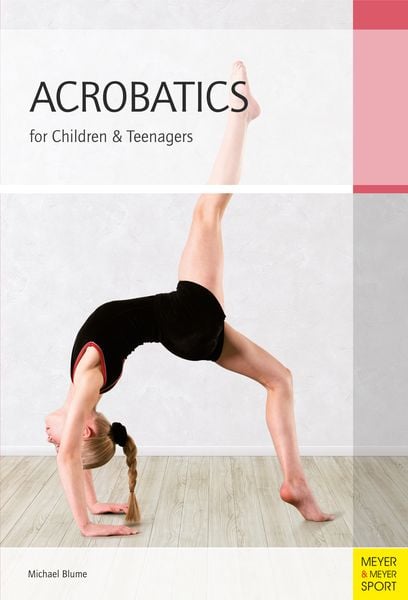
Acrobatics for Children & Teenagers
-
- Taschenbuch ausgewählt
- eBook
-
Sprache:Englisch
- Deutsch 19,95 €
- Englisch 16,99 € ausgewählt
16,99 €
UVP
18,95 €
inkl. gesetzl. MwSt.,
Beschreibung
Produktdetails
Einband
Taschenbuch
Erscheinungsdatum
15.12.2013
Abbildungen
62 Farbabb., 120 Farbfotos
Verlag
Meyer & Meyer Sport (UK) Ltd.Seitenzahl
184
Maße (L/B/H)
23,8/16,1/1,5 cm
Gewicht
452 g
Auflage
1., Auflage
Originaltitel
Akrobatik mit Kindern und JugendlichenSprache
Englisch
ISBN
978-1-78255-013-6
This book provides a vivid and informative description of the principles of partner acrobatics with children and teenagers. It provides suggestions on how to begin and how to design meaningful training sessions, as well as different options for the structuring of performances. In addition to the many preparatory exercises, the practical portion of the book introduces simple acrobatic formations that have been tried and tested. The individual chapters include detailed written and visual descriptions of the many different techniques, from pyramid building to fantasy formations, from dynamic elements to elegant partner formations.
The Evolution of Acrobatics
Acrobatics is considered a movement art with a long tradition and evolutionary history. The term “acrobatics” stems from the Greek word “akrobates”, which actually means, “one walking on his toes” and originally referred to a tightrope walker.
The oldest testimonials on acrobatics (approximately 2000 BC) were found in Egypt and consist primarily of drawings on limestone rocks.
The first written evidence stems from an account of an Egyptian feast in the 4th century BC, during which acrobats performed and built tall human pyramids.
Acrobats have always been on the fringes of society, were seen as infamous and as a “vagrant people” who remained without rights.
Their circumstances changed little during the Middle Ages. Only the emergence of the circus at the end of the 18th and beginning of the 19th century represented a definitive turning point for travelling artists and acrobats. The guaranteed training and appearance opportunities in the circus ring allowed them to develop varied, often highly specialized areas of acrobatics, such as aerobatics, springboard and banquine acrobatics.
In the mid-19th century, a new style of circus art, the salon style, emerged on the stages of variety theaters.
Alongside professional acrobatics, there was also another acrobatic development, which today we consider a recreational sport.
In addition to established professional acrobatics and highly specialized sports
acrobatics, today acrobatics as a recreational activity continues to gain popularity in clubs and school sports.
Ein neues Kapitel für Ihre Bücher
Ein neues Kapitel für Ihre Bücher
Schenken Sie Ihren alten Schätzen ein zweites Leben und erhalten Sie dafür eine Thalia Geschenkkarte.
Noch keine Bewertungen vorhanden
Verfassen Sie die erste Bewertung zu diesem Artikel
Helfen Sie anderen Kundinnen und Kunden durch Ihre Meinung.
Kurze Frage zu unserer Seite
Vielen Dank für Ihr Feedback
Wir nutzen Ihr Feedback, um unsere Produktseiten zu verbessern. Bitte haben Sie Verständnis, dass wir Ihnen keine Rückmeldung geben können. Falls Sie Kontakt mit uns aufnehmen möchten, können Sie sich aber gerne an unseren Kund*innenservice wenden.
zum Kundenservice